
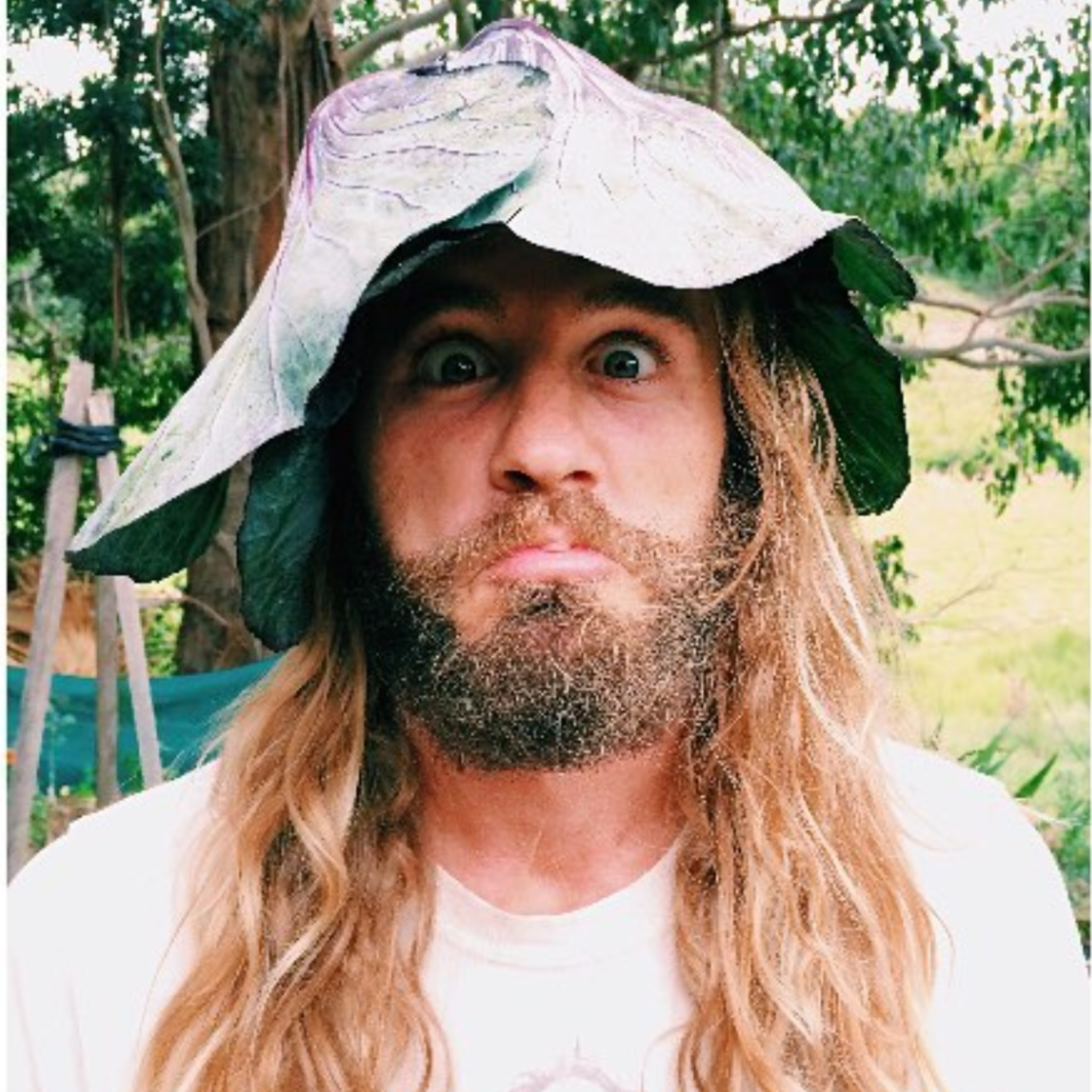
Meet Our Makers: Liam Flanagan, Founder of Good Happy
Good Happy is Byron’s best nano-batch, sparkling probiotic kombucha. It’s the product of Liam Flanagan’s vision for making real deal kombucha, brewed over the phase of one moon then fortified with arcane and ancient plant wisdom - think herbs, local roots, shrooms and berries.
The success of Good Happy is in part a product of their extremely clever positioning as functional drinks, layering adaptogenic herbs and nervous system tonics over the already respected benefits of kombucha.
Read on to learn more about how they push the boundaries of booch.
C&C: Hi Liam! Can you tell us a bit about the early days of Good Happy? Where did the idea come from and how did the business get started?
Liam: It started about fourteen years ago now. I was fermenting things in my early 20s - I had a lot of recurring gut issues and I started looking into my diet and realised that fermented foods were really missing from the more general ‘Australian’ diet. I did some reading on different approaches to diet and changed my diet to include lots of fermented foods and most of the issues I was having essentially went away. I was making krauts and kombuchas at home, just experimenting with all of the new flavours - the sours, bitters and pungent things, it was a lot of fun.
On the business side of things I was a touring musician and I’d been supplementing my music by making coffee as a barista. I could work odd hours and make good money. Eventually I opened a restaurant called The Roadhouse with a friend - our idea was to set up a wholefoods cafe. One of the things that we really wanted to do with the restaurant was provide a ferment with every meal to help with digestion I took on the role of doing all of the ferments in house, so I was doing big batches of sauerkraut and I’d go and get milk from a local farm to make kefir and yoghurt. And I was doing kombucha out of my garage at home - I started doing that in these little twenty litre buckets and selling it through the restaurant. It went really well and I got to formulate ideas, develop flavours and then test them on the market through our customer base there. Good Happy business was born and I just really slowly and organically grew from there. I moved out of my garage when I could afford it and moved into a shared kitchen with another small manufacturer. Once I outgrew that, I got my first lease and did a couple of years of doing everything on my own. A few years later, my business partners Pete and Matt showed up -. They saw my setup and asked if I needed help and I said ‘yes, I need heaps of help’! They came in and since then, we’ve gradually scaled up.
C&C: Can you explain more about how you prioritise high quality of the ingredients and herbs in the making of Good Happy kombucha?
Liam: It’s evolved quite a bit over time. I noticed that in traditional cultures herbs are used a lot to fill gaps in nutrition and wanted to find herbs that were nourishing to add into the western diet that had become so undiversified and bland. I value diversification in the food system and wanted to use things that are high quality, organic and nutritionally dense. I like to use the whole herb when I’m creating the kombucha too. We use ingredients like lavender, brahmi, tulsi and vanilla - everything is real and extracted and steeped by me and by hand. Everything we do is a hundred percent real and honest, which is the strength of the brand.
C&C: What has the process of getting Good Happy ‘on the shelf’ and into retailers been like?
Liam: It was pretty easy to start with when it was small, because it was just within the community. I knew a lot of the people who had shops and cafés in Byron Bay and they were keen to support what I was doing. I’d go and deliver everything myself, so there was a real contact with customers and I know the community had a strong connection with the brand, Good Happy is everywhere in Byron.
As it scaled the main feedback we got was, ‘this tastes so good’’ so it wasn’t hard to sell and we didn’t need to deep dive into the herbs and little extra things we do - if you use real mandarin juice versus mandarin flavour, you can tell. If every single thing in the product is real and if you tell someone this after they drink it, they say ‘that makes sense now’. The drink flavour profile is also complex, like what you might expect from a non alcoholic cocktail, it’s interesting and holds your attention for a long time.
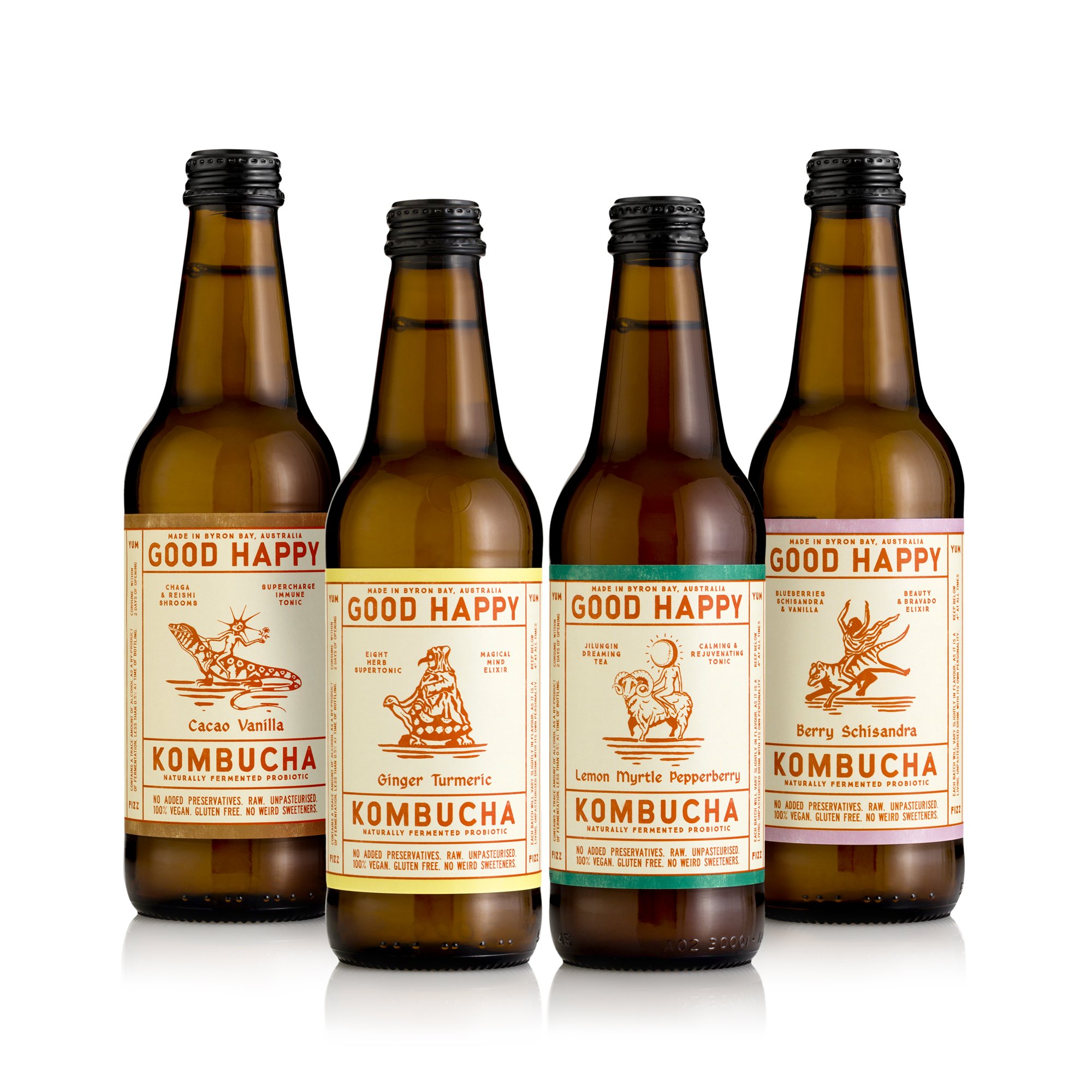
Many brands just use sugar and an artificial flavour in kombucha - that’s cool if you want to engage someone for five minutes, but if you want to keep a customer for years, it needs to be a real and interesting product.
C&C: In that process of getting the products ‘on the shelf’ and going through that evolution, how did you end up working with a distributor and why did you choose to work with Cartel & Co?
Liam: Distribution is a difficult business to do properly - you need to combine ruthless efficiency and razor sharp systems with warmth, connection and community building, it can be hard to juggle both sides of this equation. Hyassam has made a lot of effort to meet us face to face and has been very present when working with us whilst also making sure the team got runs on the board and grew the brand. It’s a partnership we really appreciate and we definitely have no regrets!
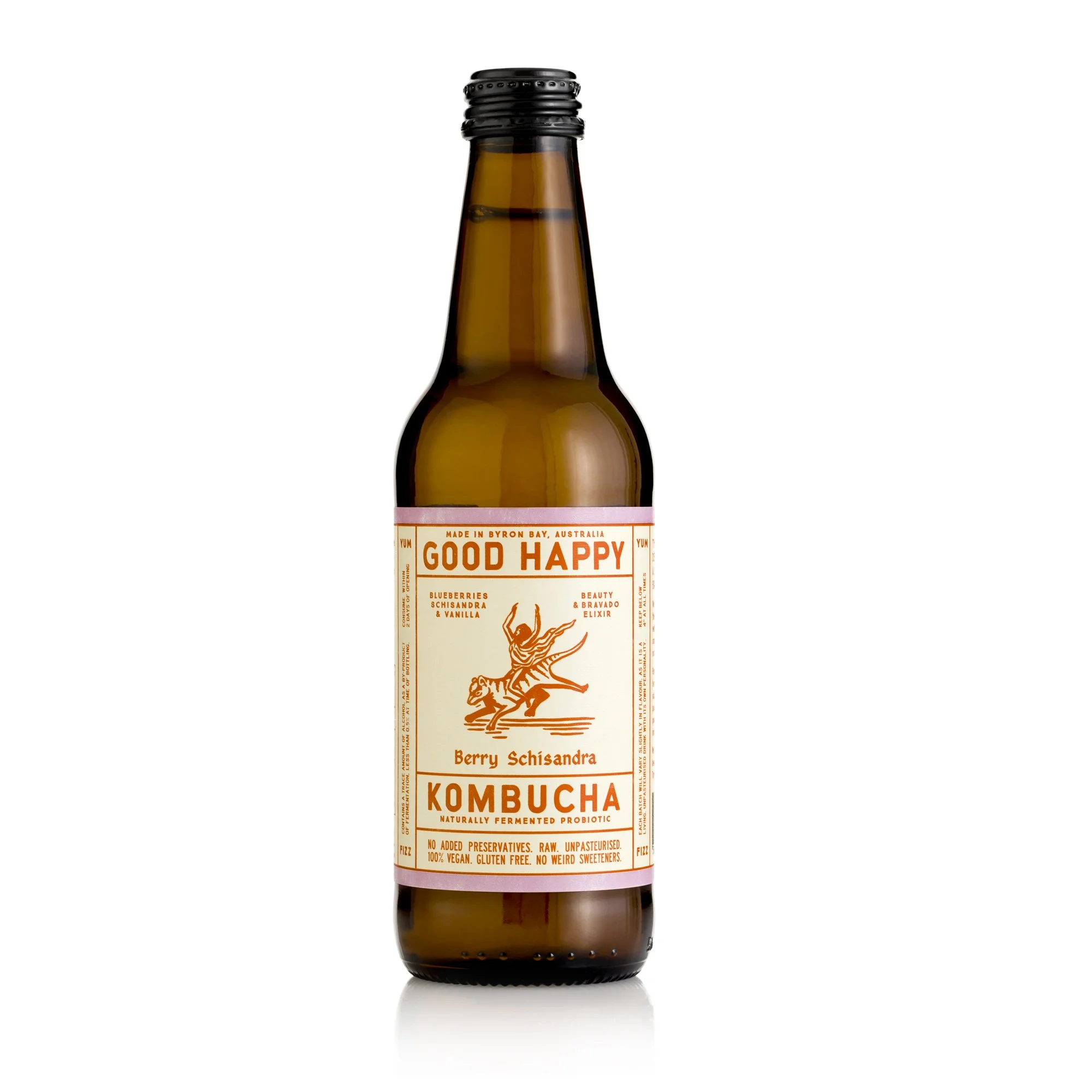
C&C: If I was brand new to the Good Happy world, which product would you recommend that I try first?
Liam: The Berry Schisandra is still the best selling product but the employee favourite is the Peach and Chamomile, it has a complex and subtle flavour profile with vanilla, tulsi and chamomile adding a nice calming affect, we love it.
C&C: What do you envision for the future of Good Happy as a brand?
Liam: Good question! Good Happy has become really well known for integrity. We resonate with the values of people who want real food, especially in the health food space.
Good Happy has always been a values driven brand - we are branching outside the world of kombucha and creating some new ‘Better For You’ products, so you can expect some extensions to the brand in 2026.
—