
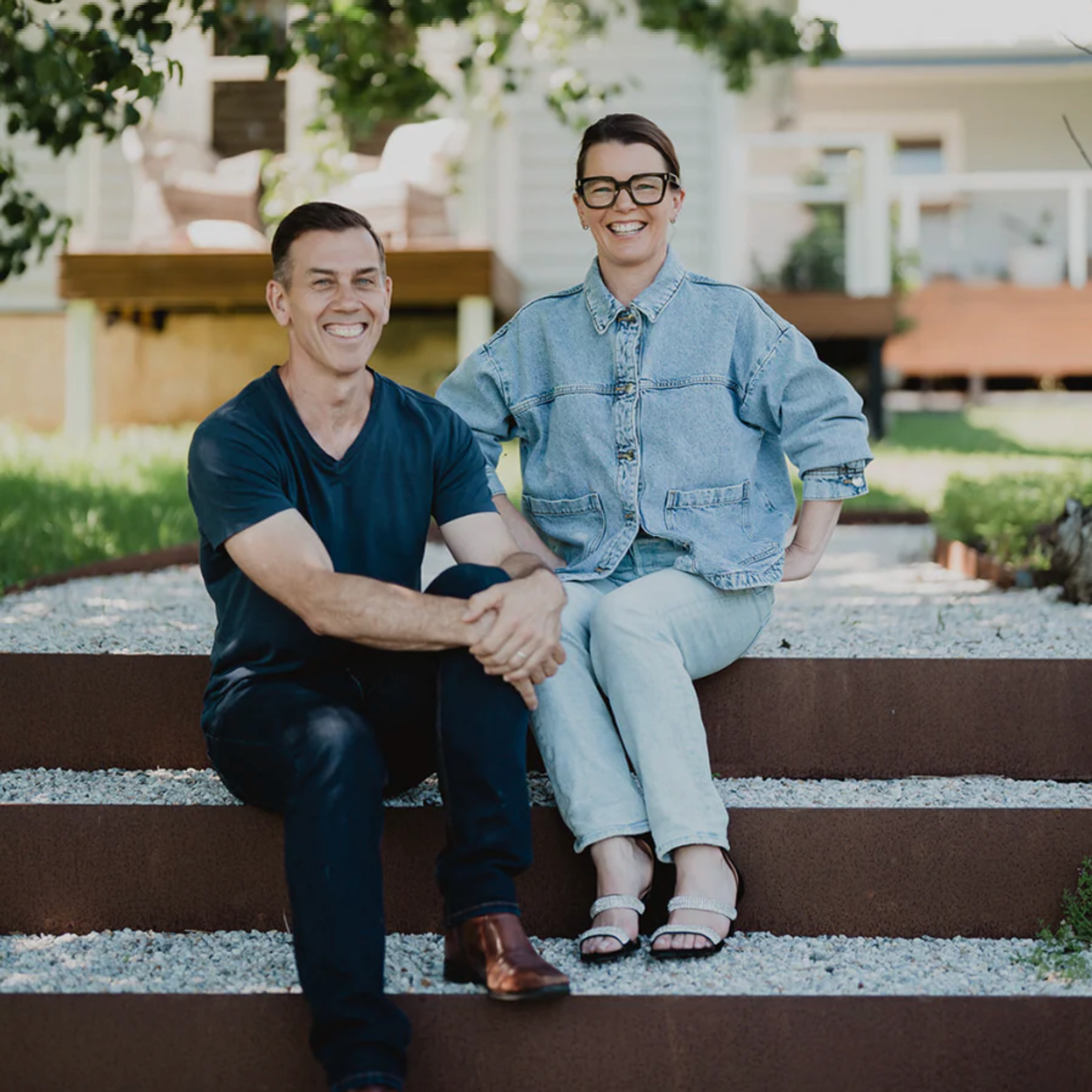
Meet Our Makers: Georgina Carberry & Damien West, Co-Founders of ZERO Store
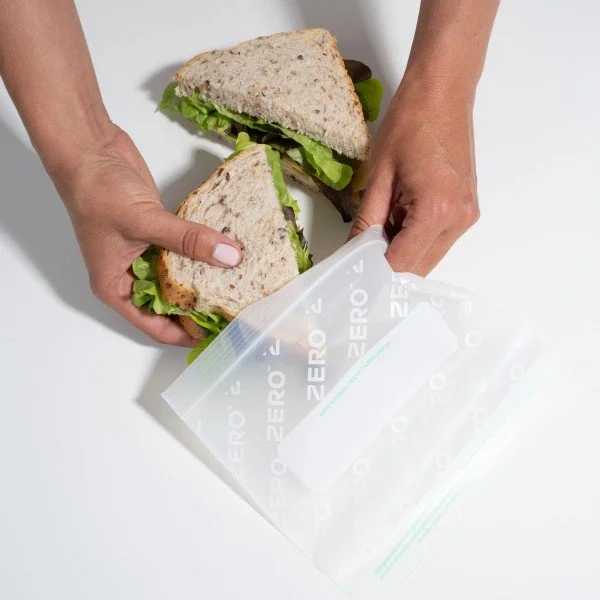
Plastic can take 500 years to break down in the environment, and we’re all here wrapping our sandwiches in cling film? ZERO Store Founders Georgina Carberry & Damien West said “enough is enough” to plastic waste and, with backgrounds in UX and product design, created cutting-edge compostable household essentials that actually freakin’ work.
ZERO Store’s plastic-free cling film, resealable bags, produce bags for fruit and veg, ultra soft baby wipes and more are feats of modern design and engineering. They are made from waste-stream plant materials, like sugar cane, broken down into polymers and acids that behave exactly like their plasticky counterparts, with one major difference: they disappear when you’re done.
C&C: Hi Georgina and Damien! Can you tell us a bit about the early days of ZERO Store? Where did the idea come from and how did the business get started?
Georgina: Our goal is the world’s first completely plastic free, compostable and single-use nappy - this was the impetus of the company.
ZERO was founded by Damien and me and our product range is probably a reflection of our personalities — we are both busy parents who care about the environment and are concerned about the future we are creating for our kids. But, we also understand that when you’re juggling work, kids, and a household, sustainability can feel expensive or inconvenient. That’s why every ZERO product is made to work brilliantly — without plastic — so busy parents don’t have to choose between performance and the planet. There’s a huge amount of single-use plastic that people consume every day without necessarily wanting to, but the options that are priced affordably and genuinely environmentally better than the plastic alternative aren’t there on the shelf. This is the through line of the brand. Our current range is very much delivering on that promise and the origin of the company started with this very clear goal to serve mums in the early years of raising children.
Damien: Yes, we came at it not just from a parenting viewpoint but from more of a design viewpoint. I’m a physical product designer and Georgina is a digital product designer, so when we looked at the problem, we thought ‘well, nappies are two percent of landfill and no one is doing a plastic free product’. The company is child-centric and is aimed at reducing a child’s footprint - and we take a full life cycle assessment view of that, so we ask whether the product is better for people and planet the entire way through the production chain.
We landed on cling film, snap lock bags and wipes at the moment because we did two and a half years in R&D to develop the nappy. There’s only one factory in the country for this and we managed to get access to their machines to do validation trials to prove that it can be done. There’s two core raw material inputs and they’re biopolymer films and non-wovens - and in order to make the nappy, you need to own the factory. The machine that’s needed is a hundred tonnes and fifty metres long - it’s like two buses end to end. So as we’re going along that journey, we’re asking which other products are using those two raw material inputs that we’ve developed with our suppliers and brand partners. We’ve now launched other products that still satisfy that familial requirement for a product that’s better for the environment and we’re always aiming to try and get to price parity, if not better. Some of our products are actually cheaper than the plastic equivalent products on shelf (or matching the price) and that’s the ultimate aim as we work towards getting that nappy up and running.
C&C: What has the process of getting ZERO Store ‘on the shelf’ and into retailers been like and how have you found the consumer response?
Damien: Woolworths approached us, so we’ve been really fortunate in who we have around us.
Georgina: From a consumer perspective - it’s a no-brainer when we present the products. We’ve had enthusiastic responses when we’re dealing directly with the retailers prior to dealing with Cartel & Co. I think the feedback is really strong because they know that the customer is really looking for alternatives that perform well. It’s also the type of product that you’re going to buy that isn’t four times the price. Take the cling wrap for example - it wraps and clings well and it slices off the blade well. Those functional components really matter to a product that is high use and everyday. There’s definitely a demand for plastic free alternatives that reduce microplastics in particular.

People are becoming really aware that microplastics are a health concern and to be honest, the company was founded with goals that were very anchored in environmental concerns. It’s the idea that we can’t save the world from plastic by recycling our way out of it - the maths just doesn’t math. We have to actually re-engineer all fast moving consumer goods from the very beginning in that design stage to design out the problem. In this instance, our focus is plastic - to get rid of the plastic in the beginning and make it with plant based materials that compost at the end of life. This way, you get this full cycle with the product so that the problem isn’t passed onto the consumer - and I think that is resonating really well with customers.
I think that there are eco brands out there that promise things, but greenwashing is real. People are doing things like blending in fifty percent virgin plastic with plant-based materials, for example, or actually using really high toxicity in the bio blends or taking recycled plastic and putting that back into plastic and calling it ‘green’. That’s not good enough for us. In those scenarios, you’re still bringing highly toxic products into the home that contain plastic and because you’re touching these products (like a cling wrap, cleaning wipe or wet wipe) all the time in a home, they’re constantly shedding small fibres that are microplastics. There’s a thousand scientific studies that have various levels of insight, but it all boils down to it just not passing the pub test for consumers that plastic is a good, healthy thing to have in the home. So wherever you can remove it, a product that’s priced well and works resonates.
Damien: From a retailer’s perspective, we get a pool from the end user - we’ll get emails from people asking where they can buy it and whether we’ve got a store that stocks our products near them.
Georgina: I’ve had a chat with other founders and this seems pretty high in terms of a signal that people are wanting these products. The faster we can get them on the shelves the better, particularly at this time because cost of living is real for people and the most cost effective way to serve this product and get it into the everyday consciousness of shoppers is to have it really well placed in retail stores that meet that need and are interested in serving that consumer.
C&C: Speaking of getting products on shelves quickly - and for other small businesses and founders that might be reading this - why did you choose to engage a distributor in this process? Has that played a role in expediting that process of getting products on the shelves?
Damien: When we originally went out, our original intention was pure D2C and online subscription - just like Who Gives A Crap. Over time, as the product range has grown, we’re now omnichannel so we’re dealing with retail through Cartel & Co, B2B - we supply Sofitel and other hotels with a Chux equivalent that’s biodegradable and we’ll develop more products for that category. We’re dealing with three channels and we’re a very small team. It’s just about where you devote your time. We also needed to leverage off of someone else’s experience - someone who deals with niche, boutique and higher end products and is already working with our customer, to get that product out there and answer those pool questions from the end user who is saying ‘hey, I live here, I’ve got this store near me - how can I get it into that store so that I can buy it locally?’.
Georgina: My read is that retailers are a relationship business and you need great people out there having those in person conversations with store owners on the ground. As a small team, we can’t do that well. We did that at the beginning - and I guess this is our approach constantly, which is to do a little bit of something to understand it first - but you can’t scale that way. We need to bring in better people and the decision is whether to bring in your own team and manage it and the honest answer is that we don’t have that expertise and we’re not the best people to guide that team. So the obvious choice was to find the right distribution partner.
When we met with Cartel & Co, we really liked their range and we feel that the first couple of years really matter in terms of making a brand visible. How those retailers represent our product in their stores matters.
If that team is going out and having that conversation and talking with the passion and enthusiasm that we have, then they’re going to be making decisions that matter for shelf space and retail placement and giving us that feedback. Those conversations really matter.
Damien: It’s brand awareness. If you can leverage off the distributor’s range and relationships with the right retailers, that’s going to grow the brand so much more quickly than trying to do it yourself. We’ve done that - we’re in Harris Farm and I used to go in and do the demos, standing there in the aisles talking to customers.
Georgina: It means you get the insight and knowledge and you value that role, so over time you get a perspective that you wouldn’t have if you didn’t do that.
C&C: Love that. If I was brand new to the ZERO Store world, which product would you recommend that I try first?
Georgina: The cling wrap!
C&C: What do you envision for the future of ZERO Store as a brand?
Georgina: My simple answer is massive impact - if you think about energy and this idea that we’ve moved away from coal and moved much more towards solar - we definitely want to see a transition across all fast moving consumer goods towards this idea of not settling for plastic-based, toxic-heavy materials at all, ever. We can do better. The impact for us involves the products that we can deliver - definitely the nappy, the wipes - we know these products will have a much greater impact when we get to those products in the product runway.
We’ve had to tolerate this idea (of plastic being necessary) for so long, so we can flip the script for people to show that we don’t. We can show that all of these products can be made better and that you don’t have to settle for terrible decisions in the design phases. We can still create amazing products that you can afford that are highly functional. I think that is going to make such a massive change, not just for our company. You’re breaking the frame that we ‘have to stay here’ in with this consumption of plastic - we just don’t.
Damien: Looking ahead, this year we’ll roll out our wet wipe, because we’ve developed a plastic-free wrapper. So it will be the world’s first 100% plastic-free wipe, to the extent that non-woven requires no preservative either, just purified water. It’s inherently anti-fungal, antibacterial, and anti-microbial. After that, we go into producing the nappy. The big picture involves manufacturing across multiple continents and developing additional products for the retail environment and the B2B hospitality/hotel scenario. Eventually, we want to eliminate plastic and be seen as a leader in that space and have ZERO known as a plastic-free brand that’s doing the right thing by people and planet.
Georgina: - that’s also fun and fabulous!
Damien: Yes - and eventually move across to farming for our own raw material inputs. One of the products we use is made from sugarcane waste and want to look at other alternatives for that, along with moving away from paper and growing our own hemp and using that with the nappy and wipes. We’re always innovating and looking for new ways to create the product better and cheaper, so that more customers can pick it up and we can make more of an impact globally.
In the background, we have a beta version of a compost bin. Essentially, it’s the size of a domestic kitchen bin but it is really an industrial composting facility with some antibacterial and antimicrobial components to it. So the nappy, the wipes and all of our plastic-free products can go into it, food scraps can go into it. The aim is to turn a nappy into compost in four days. The version we’ve got at the moment does three kilos of food scraps in twenty-four hours. Once that’s up and running, we’re probably analogous to Apple in the sense that we’re locked in - you’re never going to go to Android because you’ve got all of this kit. It makes it tricky to move out. Once you’ve got the bin, you can compost the nappy, the wipes - it all goes in there and makes it simple.
The aim is that you won’t purchase the compost bin - it will be part of the subscription for the nappy. They’ll use it for the nappy and that will be great, but they’ll then use it for food scraps too.
Georgina: It’s a very real problem, particularly in high density areas.
Damien: Sydney Council runs out of landfill in five years. So we’ve already spoken to them about a few of our products and they’re happy to run them through.
Georgina: If we could somehow get that bin accelerated and piloted, we would be wanting to do that. There’s so much potential with biopolymers - they perform incredibly well, but the inputs are a little more expensive. That will change over time - the knowledge of how to use them and how to adjust machines. This is why we’ve worked out that you have to actually manufacture to execute cost effectively because there needs to be modifications at the machine. So you can’t typically run a factory that is a plastic-based factory and then just switch it out for biopolymers because the melt time, the dwell time etc are different and that configuration and downtime isn’t a candidate for outsourcing the manufacturing. Unless a massive amount of biopolymer factories that specialise popped up, then we have to own the machines.
Damien: We’ve prototyped some hard cases for our dry wipe - our dry wipe was our first product that went to market. The reason for it being dry is the amount of greenhouse gas emissions associated with just shipping water for wet wipes. So if you ship a dry wipe, it actually has no preservatives in it and the consumer adds the water and whatever else they want to it. We did a series of hard cases and that product will come to market.
Georgina: I love that product - and there are so many that we have developed. This is our first range and as that scales, we learn, grow and gain revenue and move to the next product and just keep building that way.
—