
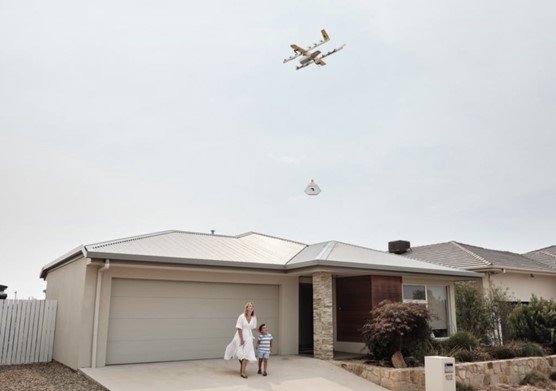
It finally happened. Drones are delivering dinner. But while the rest of the world has been messing about with futuristic tech like robo-kitty waiters and driverless cars for years, Australia is only just catching on. So does this human-free delivery movement have legs? And what are the takeaways for small business?
Delivery drones have been given the green light in Melbourne’s eastern suburbs. The drones leave from a “nest” (lol) in a Ringwood shopping center and service about 250 000 residents in Maroondah City Council. (You can also spot them in the Brissy-to-Gold Coast corridor.)
The drones are operated by Wing, a subsidiary of Google’s parent company Alphabet. People order via DoorDash and watch their burritos come in to land on the front lawn minutes later.
Arguments for airborne eats: Lower emissions, traffic congestion and labour costs. Ridiculously convenient. Greater accessibility to food in certain areas, and for less mobile people. Particularly awesome for “last mile” delivery where parking and traffic can be a real pain.
Arguments against airborne eats: Embodied energy – that is, the materials required to create and maintain fleets of drones – is nothing to sneeze at. Possible noise pollution (“flying whippersnippers on steroids”). Job losses. Safety concerns. Health concerns (see: instant junk food manifestation).
The biggest kicker for Aussie businesses: While Wing originally pledged to partner with local businesses to help them “reach new customers” and “take [them] to new heights”, it has since pivoted to dealing with larger retail players to cut costs and grow. This ultra-convenient, scale-reliant model is another challenge for small businesses; from making ends meet after platform commissions (which can be up to 20%) to the impossibility of fulfilling an order in 10 minutes flat…is skyfood just another consolidation of power?